
Could Co-Buying Be the Answer for Some First-Time Buyers?

For many first-time buyers in Denver, the biggest challenge right now isn’t the desire to own a home, it’s simply making the numbers work. Between rising home prices, higher interest rates, and the cost of living continuing to climb, affordability has become a major hurdle for a lot of buyers trying to enter the market.
But that doesn’t mean the dream of homeownership is gone. More buyers are getting creative with how they approach the process, and one strategy that’s gaining traction is co-buying. For the right people and the right situation, it can be a smart way to stop waiting and start building equity sooner.
The Dream Is Still Alive. The Math Just Isn’t Working for Everyone.
Young people haven’t given up on the dream of owning a home, not even close. According to FirstHome IQ, homeownership still ranks among the top life goals for the next generation.
The problem? Affordability. In fact, 73% of Gen Z and millennial buyers say affordability is the reason homeownership hasn’t become a priority yet. And it shows. First-time buyers now account for just 21% of all home purchases, the lowest share since the National Association of Realtors (NAR) started tracking the data in 1981.
In Denver specifically, many buyers are finding that even condos and starter homes can feel financially out of reach without a solid game plan and creative financing strategies.
Still, some buyers are finding ways to make it happen, and co-buying is becoming one of those solutions.
If you’re still exploring financing options, it can also help to get pre-approved early so you understand exactly what’s possible based on your income, goals, and timeline.
So, What’s Co-Buying?
Co-buying means purchasing a home with someone else, such as a friend, sibling, or unmarried partner. Buyers combine incomes, split the down payment, and share the ongoing monthly costs of ownership.
For some people, it’s a creative way to turn “someday” into a move-in date that’s much closer than they originally thought possible.
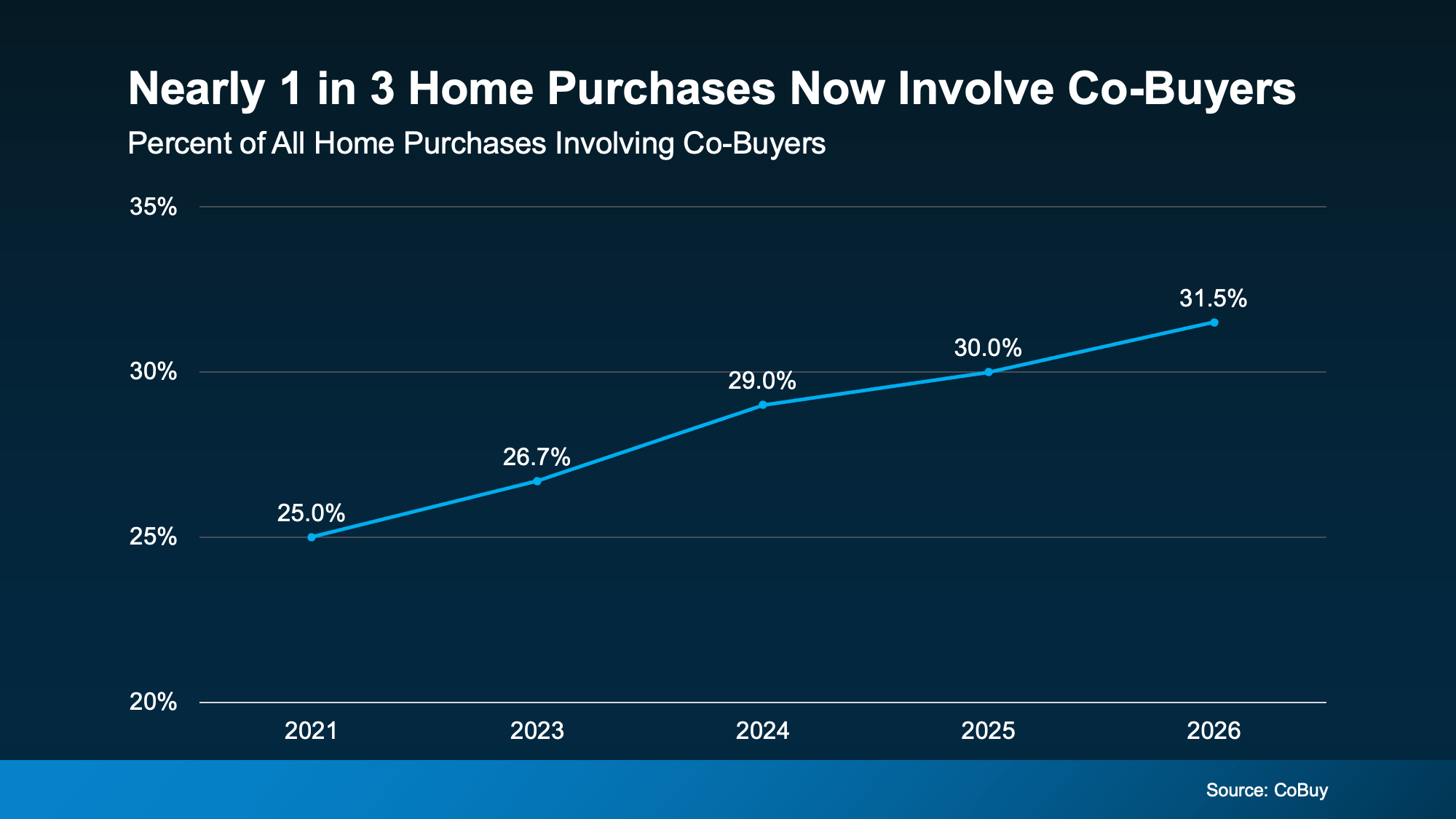
And it’s catching on quickly. According to CoBuy.io, 64 million Americans now co-own a home with someone they’re not married to. In fact, 31.5% of home purchases involve co-buyers.
Why It Works for Some Buyers
Quicker path to homeownership: If owning a home is a serious goal, buying with someone else can help shorten the timeline. Two or more people saving together can often reach a down payment much faster than one person doing it alone.
More purchasing power: Multiple incomes can open the door to better neighborhoods, larger homes, or properties with features buyers may not have been able to afford individually.
Easier loan qualification: Additional income may help improve debt-to-income ratios and strengthen the overall loan application.
Lower monthly housing costs: Splitting mortgage payments, utilities, repairs, and maintenance costs can sometimes make ownership more affordable than renting.
For some buyers, co-buying isn’t about settling. It’s about creating an opportunity to start building wealth and equity sooner instead of sitting on the sidelines waiting for perfect conditions.
And in a market like Denver, where appreciation has historically rewarded long-term homeowners, getting into the market sooner rather than later can make a meaningful difference over time.
If you’re curious what’s currently available at different price points, you can always start your home search to get a better sense of what opportunities exist in today’s market.
Things To Keep in Mind
Like any major financial decision, co-buying works best when everyone involved is aligned financially and personally. This approach typically works best with people you trust and who share similar long-term goals.
Before moving forward, it’s important to discuss:
- How the down payment and monthly expenses will be split
- Who is responsible for repairs and maintenance
- What happens if someone wants to move or sell
- How ownership percentages will be structured
That’s why having a written co-ownership agreement is usually a smart move. It helps establish expectations upfront and protects everyone involved if circumstances change later.
Think of a co-ownership agreement less as a legal formality and more as a roadmap for protecting both the relationship and the investment.
Bottom Line
Affordability challenges are very real right now, especially for first-time buyers. But that doesn’t necessarily mean homeownership has to stay out of reach indefinitely. For some people, co-buying can be a smart and practical way to stop waiting and start building equity sooner.
Every situation is different, and there’s no one-size-fits-all approach when it comes to buying a home. If you’ve been wondering whether co-buying could make sense for your situation, I’d be happy to talk through the pros, cons, and what it could realistically look like in today’s Denver market.
No pressure, no sales pitch, just a conversation to help you understand your options. Feel free to reach out to me anytime.
Categories
- All Blogs (43)
- Affordability (1)
- Buyers (28)
- Buying Myths (15)
- Buying Tips (17)
- Divorce (1)
- Estate Planning (1)
- First Time Home Buyers (22)
- Home Prices (7)
- Investors (1)
- Market Update (6)
- Mortgage Rates (7)
- Move-Up Buyers (9)
- New Construction (2)
- Probate (1)
- Rent vs. Buy (2)
- Sellers (20)
- Selling Myths (7)
- Selling Tips (14)
Recent Posts









GET MORE INFORMATION