
Inherited a House in Denver? How Probate Works and Your Options to Keep, Rent, or Sell

Inheriting a home in Denver rarely arrives at a convenient moment. It usually comes in the middle of grief, family conversations, and a long list of practical tasks that nobody feels ready for. Suddenly you are responsible for a property that may be worth hundreds of thousands of dollars, still has utility bills and property taxes due, and may be sitting empty while you figure out what comes next. If you are in that position right now, you are far from alone. According to the Denver Metro Association of REALTORS® August 2026 Market Trends Report, which cited data from Cotality, inheritance transfers in Colorado rose 19 percent between 2021 and 2025 and accounted for just over 14 percent of all property transfers in the state last year, roughly double the national average.
This guide walks through what actually happens to a house after someone passes away in Colorado, when probate is and is not required, how the process works in Denver specifically, and how to decide whether keeping, renting, or selling the home makes the most sense for you and your family.
Do You Need Probate to Sell an Inherited House in Colorado?
The answer depends on how the home was titled and what planning was done before your loved one passed. If the house was owned jointly with a right of survivorship, it typically passes to the surviving owner without probate. If the home was held in a living trust, the successor trustee usually manages or sells it under the terms of the trust, also without probate. Colorado also allows homeowners to record a beneficiary deed, sometimes called a transfer on death deed, which names who receives the property at death. That deed must be recorded before the owner passes away to be effective, and even the official statutory form carries a warning that it may not avoid probate entirely, since creditor claims or other estate assets can still require a probate case.
If the home was titled solely in the deceased person's name and none of those tools were in place, probate is generally required before the property can be sold or transferred. This surprises many families, because they have heard that Colorado offers a simplified small estate process. It does, but the small estate affidavit only applies to personal property such as bank accounts and vehicles. It cannot be used to transfer a house or any other real estate, regardless of how modest the estate is.
How Probate Works in Denver

Most Colorado estates move through what is called informal probate. Someone, usually the person named as executor in the will or a close family member, applies to be appointed as the personal representative. In an informal case, the application is reviewed by the court registrar without a hearing, which keeps the process faster and less expensive. Formal probate, which involves notice and a hearing before a judge, is typically reserved for situations such as a contested will, a missing original will, or uncertainty about who the heirs are.
Once appointed, the personal representative receives Letters from the court. Those Letters are the document title companies and buyers will ask to see, because they prove who has the legal authority to act for the estate. In Colorado's standard unsupervised administration, a personal representative generally has the power to list and sell the home without going back to court for separate approval, unless the will restricts that power or the court has ordered supervised administration.
The personal representative also publishes a notice to creditors. Under Colorado law, creditors generally have four months from the first publication of that notice to file claims against the estate. This is the one part of the timeline that cannot be compressed. The good news is that the house can often be listed and sold during that window. What typically must wait is the final distribution of proceeds to heirs, since valid debts and expenses need to be paid first. For a straightforward estate, Colorado probate attorneys commonly describe the overall process as taking roughly six to twelve months, though every case is different.
A Denver-specific detail most families do not know: The City and County of Denver has its own dedicated Denver Probate Court, the only court of its kind in Colorado. It was created by the state constitution and has exclusive jurisdiction over estates in Denver. If your loved one lived in Arvada, Aurora, Littleton, or elsewhere in the metro, probate is instead handled by the district court in that county. Knowing where the case belongs from the start can save weeks of confusion.
Your Three Main Options: Keep, Rent, or Sell
Keeping the home can make sense when an heir wants to live there, when the property is paid off, or when the family has a strong emotional connection to it. DMAR's report noted that many Colorado heirs appear to be holding onto inherited homes, either to live in or to rent. Before choosing this path, it is worth running the real monthly numbers. Property taxes, homeowners insurance, maintenance, and any HOA dues continue regardless of who lives there, and many inherited homes have deferred updates such as an aging roof, furnace, or water heater that a new owner will eventually face. If there are multiple heirs, keeping the home usually means one person buys out the others, which may require financing at today's rates.
Renting the home can create income and preserve a long-term asset, but it turns heirs into landlords. That means tenant screening, repairs, compliance with Denver's short-term and long-term rental rules, and shared decision-making if the home is owned by several siblings. Renting tends to work best when one person is clearly in charge, the family agrees on the plan in writing, and the home is already in rent-ready condition.
Selling is often the cleanest option when heirs live out of state, when siblings want to divide the value fairly, or when nobody has the time or budget to maintain the property. A sale converts the home into cash that can be divided according to the will or Colorado law, and it removes ongoing carrying costs and liability for a vacant property.
Taxes: Why the Date-of-Death Value Matters
One of the most important and least understood rules for inherited homes is the stepped-up basis. Under federal tax law, the tax basis of inherited property is generally reset to its fair market value on the date of death rather than what your loved one originally paid. If a parent bought a Denver home decades ago for a fraction of today's value, most of that lifetime appreciation is generally not subject to capital gains tax when the heirs sell. Taxable gain, if any, is typically measured from the date-of-death value to the eventual sale price, minus selling costs.
This is why documenting the home's value as of the date of death is so valuable. An appraisal or a well-supported market analysis tied to that date can make tax filing far simpler later. Colorado reassesses property values for tax purposes on a two-year cycle rather than at transfer, but any exemptions that belonged to the prior owner, such as the senior homestead exemption, may not carry over to heirs. It is worth confirming with the county assessor and a CPA before making assumptions.
What Today's Denver Market Means for an Inherited Home
If selling is on the table, current conditions matter. DMAR's August 2026 report showed a metro market that is steady rather than dramatic: 13,080 active listings, a median close price of $594,495 that was essentially unchanged from a year earlier, and homes spending a median of 27 days in the MLS. Underneath those averages, the market is split by property type. Detached single-family homes sold in a median of 24 days, while condos and townhomes took a median of 45 days, and attached home prices were down nearly 5 percent year over year. If you have inherited a condo, expect a longer runway and keep monthly HOA dues in mind while the home is on the market.
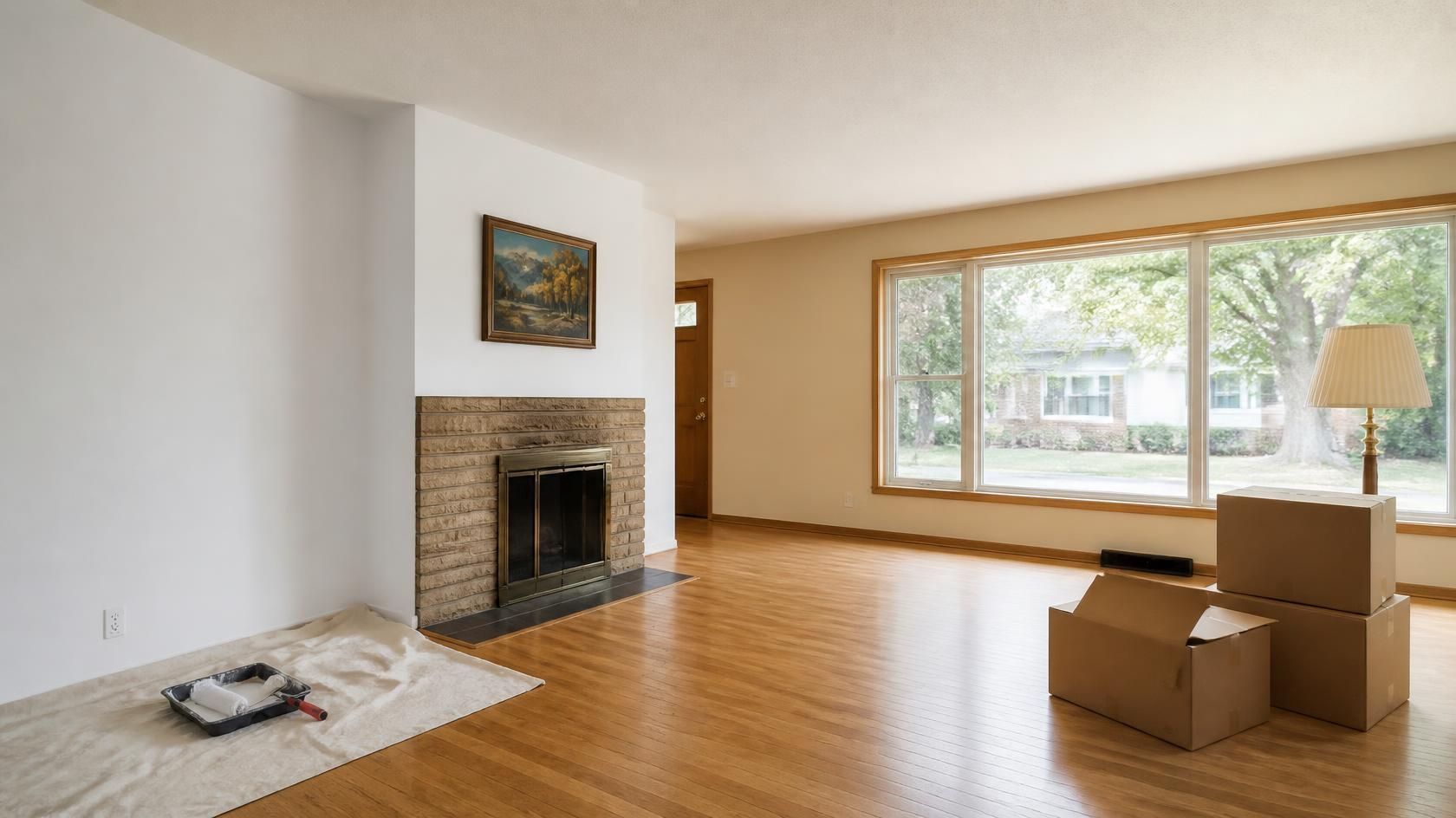
Mortgage rates are the other factor. Freddie Mac's weekly survey showed the average 30-year fixed rate at about 7 percent in late September, the highest level of the year. At that level, buyers are highly payment sensitive and tend to reward homes that are priced accurately from day one. Inherited homes are often dated, and today's buyers are noticing condition. That does not mean you must renovate. Many estates sell successfully as-is, but the pricing needs to reflect the condition honestly. A thoughtful middle path, such as a deep clean, removing personal belongings, fresh paint, and addressing obvious safety items, often produces a better net result than either a full remodel or no preparation at all.
Practical First Steps for Denver Heirs
In the first few weeks, focus on protecting the property and the estate. Secure the home, change the locks if many people have keys, and keep utilities on so pipes do not freeze as Denver temperatures drop. Call the homeowners insurance carrier right away. Many standard policies limit coverage once a home has been vacant for a period of time, and a vacant-property policy or endorsement may be needed. Keep paying the mortgage, property taxes, and HOA dues from estate funds where possible, and keep careful records, because the personal representative will need to account for everything.
It is also wise to avoid clearing out or selling major belongings before a personal representative is appointed, and to bring in an estate attorney early if there is no will, a disputed will, or disagreement among heirs. If siblings cannot agree on whether to keep or sell, an outside opinion of value and a clear written plan can often resolve the stalemate before it becomes a legal dispute.
Frequently Asked Questions
Can I sell an inherited house in Colorado before probate is finished?
Often, yes. Once a personal representative is appointed and has Letters from the court, they can typically list and sell the home in unsupervised administration. Final distribution of the proceeds usually waits until the four-month creditor period has passed and debts are paid.
Can a small estate affidavit transfer a house in Colorado?
No. Colorado's small estate affidavit applies only to personal property. Real estate titled solely in the deceased person's name generally requires probate unless it passes through a trust, a recorded beneficiary deed, or joint ownership.
Where is probate filed for a Denver home?
If the deceased person lived in the City and County of Denver, the case goes to the Denver Probate Court. For residents of other metro counties, probate is handled by that county's district court.
Do I pay capital gains tax on an inherited house?
Possibly, but usually far less than people expect. The tax basis is generally reset to the home's fair market value on the date of death, so tax typically applies only to gain after that date. A CPA can confirm how this applies to you.
What if my siblings and I disagree about selling?
Start with shared facts: a professional estimate of value, the monthly carrying costs, and each person's goals. Buyouts are common when one sibling wants to keep the home. If agreement is not possible, an estate attorney can explain the legal options.
Let's Talk Through Your Next Step
Inheriting a home is one of those moments where the practical decisions and the emotional ones are tangled together, and there is no reason to sort through them alone. Whether you are still gathering information, working with an attorney on probate, or ready to understand what the home might sell for in today's market, I am happy to help you see the full picture. I can provide a no-pressure estimate of value, walk you through what preparing the home would realistically involve, and coordinate with your attorney and CPA so everyone is working from the same plan. When you are ready, reach out to me and we will take it one step at a time.
Disclaimer: This article is for general informational purposes only and is not legal, tax, or financial advice. Probate, estate, and tax rules depend on your specific circumstances. Please consult a qualified Colorado estate attorney and a licensed tax professional before making decisions about an inherited property.
Categories
- All Blogs (43)
- Affordability (1)
- Buyers (28)
- Buying Myths (15)
- Buying Tips (17)
- Divorce (1)
- Estate Planning (1)
- First Time Home Buyers (22)
- Home Prices (7)
- Investors (1)
- Market Update (6)
- Mortgage Rates (7)
- Move-Up Buyers (9)
- New Construction (2)
- Probate (1)
- Rent vs. Buy (2)
- Sellers (20)
- Selling Myths (7)
- Selling Tips (14)
Recent Posts









GET MORE INFORMATION