
Mortgage Rates Are Stuck Above 7%: What Denver Buyers and Sellers Should Do Now

For about two months, the Denver real estate conversation has followed mortgage rates up the hill. Seven straight weekly increases pushed the average 30-year rate to 7.40%, the highest level since 2023, and last week it finally stopped climbing. It also did not come down. It just sat there. If you are a buyer who has been refreshing rate headlines waiting for relief, or a seller wondering whether this fall market is about to get any easier, that pause is worth paying attention to, because it changes the question. It is no longer "how high will rates go?" It is "what do I do if rates stay right here for a while?"
That is a much more useful question, and the good news is it has real answers.
Where Are Mortgage Rates Right Now?
According to Freddie Mac's Primary Mortgage Market Survey, the average 30-year fixed mortgage rate was 7.40% for the week of October 15, 2026, unchanged from the week before and up from 6.27% at the same time last year. The average 15-year fixed rate was 6.71%, compared with 5.52% a year ago. Daily lender quotes have drifted slightly higher since then, so "stuck" is probably the most accurate way to describe it.
Keep in mind that Freddie Mac's number is a national average for borrowers with excellent credit and 20% down on a conventional loan. The rate you are actually quoted depends on your credit, down payment, loan type, and whether you pay points. Two Denver buyers looking at the same house can walk away with very different payments, which is why getting more than one lender quote is one of the easiest ways to save real money right now.
Why Aren't Mortgage Rates Coming Down?
A lot of people assume the Federal Reserve sets mortgage rates. It doesn't. The Fed sets a short-term rate for banks, and it actually raised that rate in September for the first time since 2023. Mortgage rates take their cues mostly from longer-term bond yields, especially the 10-year Treasury, which has been hovering around 5%. When investors are worried about inflation and demand a higher return to hold long-term bonds, mortgage rates follow. That is largely what has happened this fall, and it is why rates can keep rising even when everyone on the internet is confidently predicting cuts.
I'm not going to tell you where rates will be in January. Nobody knows, and the people who sound the most certain are usually the ones selling something. What I can tell you is how to make good decisions with the rate we actually have.
What 7.4% Means for a Denver Monthly Payment
Let's run the numbers. The Denver Metro Association of REALTORS® (DMAR) reports a year-to-date median close price of $650,000 for detached homes across the metro. With 20% down, that is a $520,000 loan.
At last year's average rate of 6.27%, the principal and interest payment on that loan would be about $3,209 a month. At 7.40%, it is about $3,600. That is roughly $390 more every month, or about $4,700 a year, before property taxes, insurance, or HOA dues. Flip it around and the picture gets clearer: a buyer who budgeted that same $3,209 payment now qualifies for a loan of about $463,000 instead of $520,000, which is close to $57,000 less buying power for the exact same monthly check.
These examples show principal and interest only on a 30-year fixed loan. Your full payment will also include property taxes, homeowners insurance, and any HOA dues or mortgage insurance.
If you are shopping condos or townhomes, the dollar gap is smaller, and that segment has its own set of opportunities and headaches. I covered both in my post on whether Denver condos are a good buy right now.
How This Is Playing Out in the Denver Market

Higher rates are showing up locally, and not all of it is bad news for buyers. DMAR's latest report showed 13,567 active listings in September, the highest September level since 2011, while closed sales were down more than 21% from a year earlier. More homes and fewer buyers is the recipe for leverage. Even so, sellers were still getting about 98.5% of their list price on average, which tells me well-priced homes in good locations are still selling. I broke down inventory, days on market, and pricing in more detail in my September 2026 Denver housing market update.
The takeaway is that Denver is not one market right now. Condos and townhomes have plenty of supply and softer prices. Well-priced detached homes in desirable neighborhoods are still moving. Overpriced homes in any segment are sitting. The right move for you depends a lot more on your price range, property type, and neighborhood than on the national rate headline.
Smart Moves for Denver Buyers When Rates Are Above 7%
Start with this: don't let the headline make the decision for you. A higher rate shrinks your budget, but it also shrinks the crowd. Fewer buyers means more room to negotiate on price, repairs, and closing costs, and that can claw back a meaningful chunk of what the rate is costing you.
One of the most useful tools right now is a seller-paid rate buydown. Instead of only asking for a lower price, you ask the seller to put concessions toward lowering your interest rate, either permanently with discount points or temporarily with something like a 2-1 buydown, where your rate is two points lower in year one and one point lower in year two. On the $520,000 example above, a 2-1 buydown from 7.40% would cut the payment by roughly $680 a month in the first year and about $350 a month in the second, at a cost of around $12,300 to fund. Depending on the numbers, that can do more for your monthly budget than the same amount knocked off the price. Your lender can run both scenarios side by side, tell you your loan program's concession limits, and confirm how you'll qualify, since many programs still qualify you at the full rate.
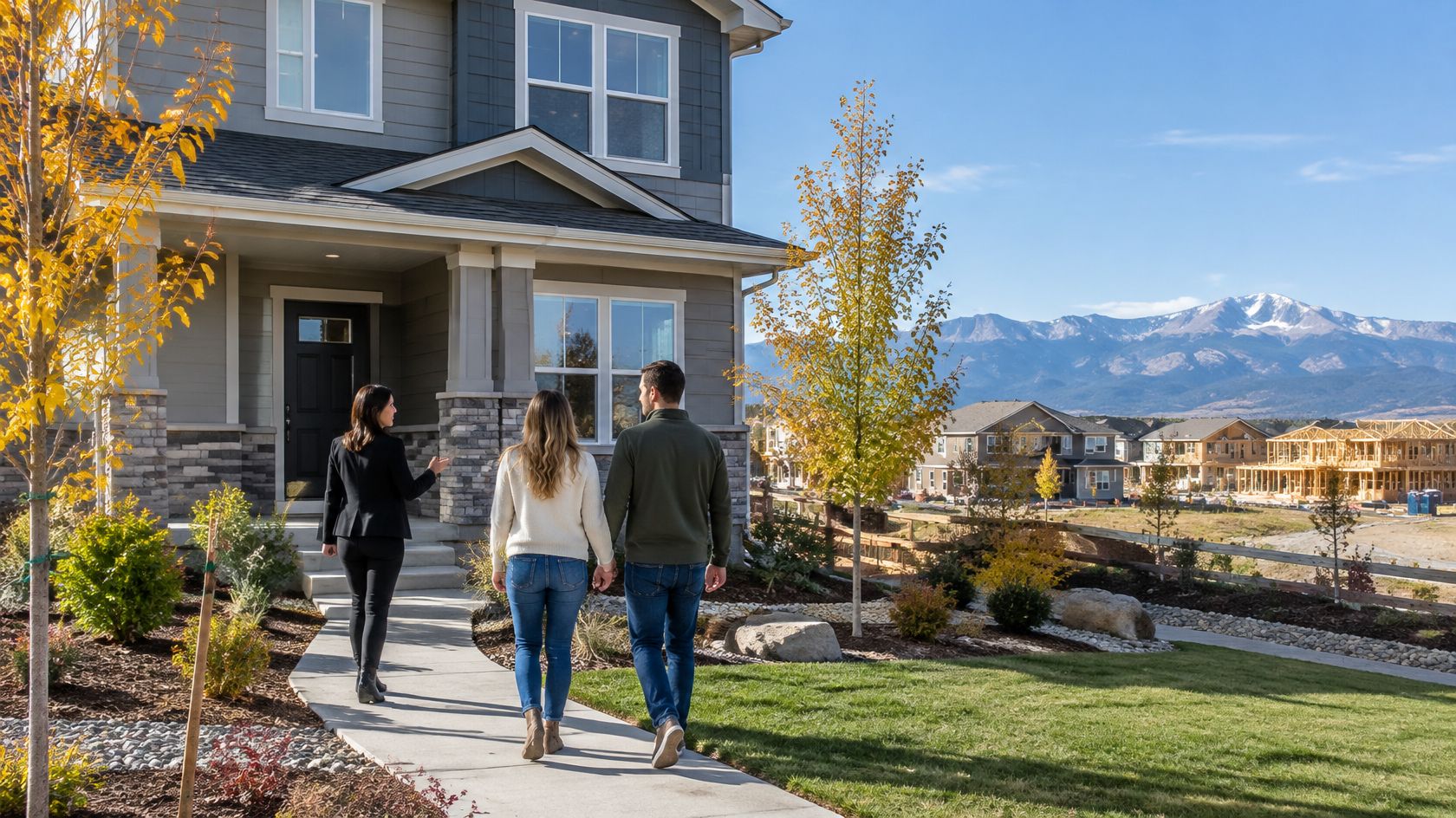
New construction deserves a fresh look, too. Homebuilders are feeling this market at least as much as everyone else. The National Association of Home Builders reported that builder confidence fell in October to its lowest level since June 2012, about 43% of builders said they cut prices, and nearly two-thirds offered sales incentives. That's national data, not a Denver-specific count, but it means a builder sitting on finished inventory may be more willing to fund a rate buydown or closing costs than it would have been a year ago. If you want to see what's out there, you can browse current new construction homes around Denver. Just remember the builder's sales office works for the builder. Read the contract carefully, and compare the builder's preferred lender against at least one outside quote before you assume the incentive is the best deal.
Finally, be careful with "marry the house, date the rate." Refinancing later may become an option if rates come down, but nobody can promise when, and refinancing has its own costs. Buy a home whose payment works for you today, and treat any future refinance as a bonus, not the plan.
What Denver Sellers Should Do Now
If you are selling, here is the part you may not love: a lot of buyers have quietly lowered their price range, and the ones still shopping are doing payment math on every listing. Pricing correctly from day one matters more now than it did in the spring. A home that starts too high tends to sit while buyers wait for a reduction, especially in price ranges where inventory has built up.
This is also where you can get creative. Offering to fund a rate buydown can make your home more affordable on a monthly basis without a headline price cut, and if you are competing with a new-construction community down the road that's offering incentives, you may need to meet buyers somewhere in the middle. Marketing the payment, not just the price, can put your home in front of buyers who would otherwise scroll past it. And condition still matters. With more homes to choose from, buyers are less willing to take on projects, so move-in-ready homes keep getting the strongest response.
Should You Wait for Mortgage Rates to Drop?
This is the question I hear most, and the answer depends on your situation, not on a forecast. Waiting can make sense if your finances need time, your job is in flux, or you aren't sure you'll stay in the area long enough to make buying worthwhile. Buying can make sense if you've found the right home, the payment fits your budget, and you plan to stay long enough to ride out the ups and downs.
Here's the thing a lot of "just wait" advice skips: if rates do fall meaningfully, you won't be the only one who noticed. Buyers who are sitting on the sidelines today tend to come back at the same time, and the negotiating room you have right now can disappear quickly. I'm not saying that to rush anyone. I'm saying the rate isn't the only number that moves. The better approach is to look at your actual numbers, your timeline, and the specific neighborhood you care about, and make the decision from there.
Frequently Asked Questions
What are mortgage rates in Denver right now?
Freddie Mac reported a national average 30-year fixed rate of 7.40% for the week of October 15, 2026, unchanged from the prior week and up from 6.27% a year earlier. Denver borrowers generally see rates close to the national average, but individual quotes depend on credit, down payment, loan type, and points.
Why aren't mortgage rates going down?
Mortgage rates follow longer-term bond yields, especially the 10-year Treasury, more than they follow the Federal Reserve. With the 10-year Treasury around 5% and inflation concerns still in the picture, mortgage rates have stayed elevated even after weeks of headlines predicting relief.
How much more is a Denver mortgage payment at 7.4% than last year?
On a $520,000 loan, roughly what a median-priced detached Denver-area home requires with 20% down, going from 6.27% to 7.40% adds about $390 a month in principal and interest.
Can the seller or builder help pay down my interest rate?
Often, yes. Sellers and builders can contribute concessions toward a permanent or temporary rate buydown, subject to your loan program's limits. Compare a buydown against a price reduction with your lender before you write an offer.
Let's Look at Your Numbers
A rate that won't budge can make it feel like you're stuck too, but for a lot of Denver buyers and sellers, it just means the playbook changes. If you're thinking about buying or selling this fall or next spring and want to see what today's rates actually mean for your situation, I'm happy to talk it through, connect you with a lender I trust to run real numbers, or pull data for the neighborhood you care about. No giant sales pitch. Just a clear picture so you can decide what makes sense for you.
This article is for general informational purposes only and is not financial, lending, or tax advice. Mortgage rates, loan terms, and eligibility vary by borrower and lender and can change daily. Please consult a licensed mortgage professional for advice specific to your situation.
Categories
- All Blogs (46)
- Affordability (3)
- Buyers (31)
- Buying Myths (15)
- Buying Tips (18)
- Divorce (1)
- Estate Planning (1)
- First Time Home Buyers (23)
- Home Prices (7)
- Investors (1)
- Market Update (7)
- Mortgage Rates (8)
- Move-Up Buyers (9)
- New Construction (3)
- Probate (1)
- Rent vs. Buy (2)
- Sellers (22)
- Selling Myths (7)
- Selling Tips (14)
Recent Posts





GET MORE INFORMATION