
Rent vs. Buy in Denver: Is It Smarter to Rent or Buy Right Now?

If you've rented in Denver over the last year or so, you've probably noticed something you haven't seen in a long time: leverage. Apartment vacancy across the metro hit its highest level in 16 years at the end of 2025, rents slipped, and a lot of buildings started throwing in a free month or two just to fill units. Meanwhile, mortgage rates have spent this fall above 7%, even after three straight weeks of small declines. So if you're sitting in your apartment wondering whether buying still makes sense, you're asking a fair question, and the honest answer is a little different than what you usually hear from people in my line of work.
Here's the short version. On a straight month-to-month comparison, renting is cheaper than buying a comparable place in most of the Denver metro right now. That doesn't automatically mean you should keep renting. It means the decision comes down to how long you'll stay, what you're comparing, and what you want your money doing over the next five to ten years. Let's run the numbers.
Is It Cheaper to Rent or Buy in Denver Right Now?
For most people, yes, renting is cheaper on a monthly basis. CBRE's third-quarter 2026 report puts the average Denver apartment rent at $1,776, down 2.9% from a year ago. The Apartment Association of Metro Denver (AAMD) landed on the same $1,776 average in its most recent survey, from the second quarter.
Compare that to buying. The Denver Metro Association of REALTORS® (DMAR) reported a median close price of $375,000 for condos and townhomes in October. Put 10% down at Freddie Mac's latest average rate of 7.18%, and the principal and interest payment is about $2,285 a month. That's roughly $510 more than the average rent before you add property taxes, homeowners insurance, HOA dues, and mortgage insurance, and in a condo the HOA alone can be a meaningful number. For a detached home at October's median of $645,000, the same 10% down puts principal and interest at about $3,935 a month.
Redfin's data tells the same story from a different angle. Based on December 2025 figures, a household needed about $145,000 in annual income to afford a typical home in Denver, versus about $74,000 to afford a typical rental. That's a big gap, and pretending it doesn't exist doesn't help anybody.
Payment examples are principal and interest only on a 30-year fixed loan at 7.18% with 10% down. Your full housing payment would also include property taxes, homeowners insurance, and any HOA dues or mortgage insurance.
What Renting in Denver Actually Looks Like Right Now
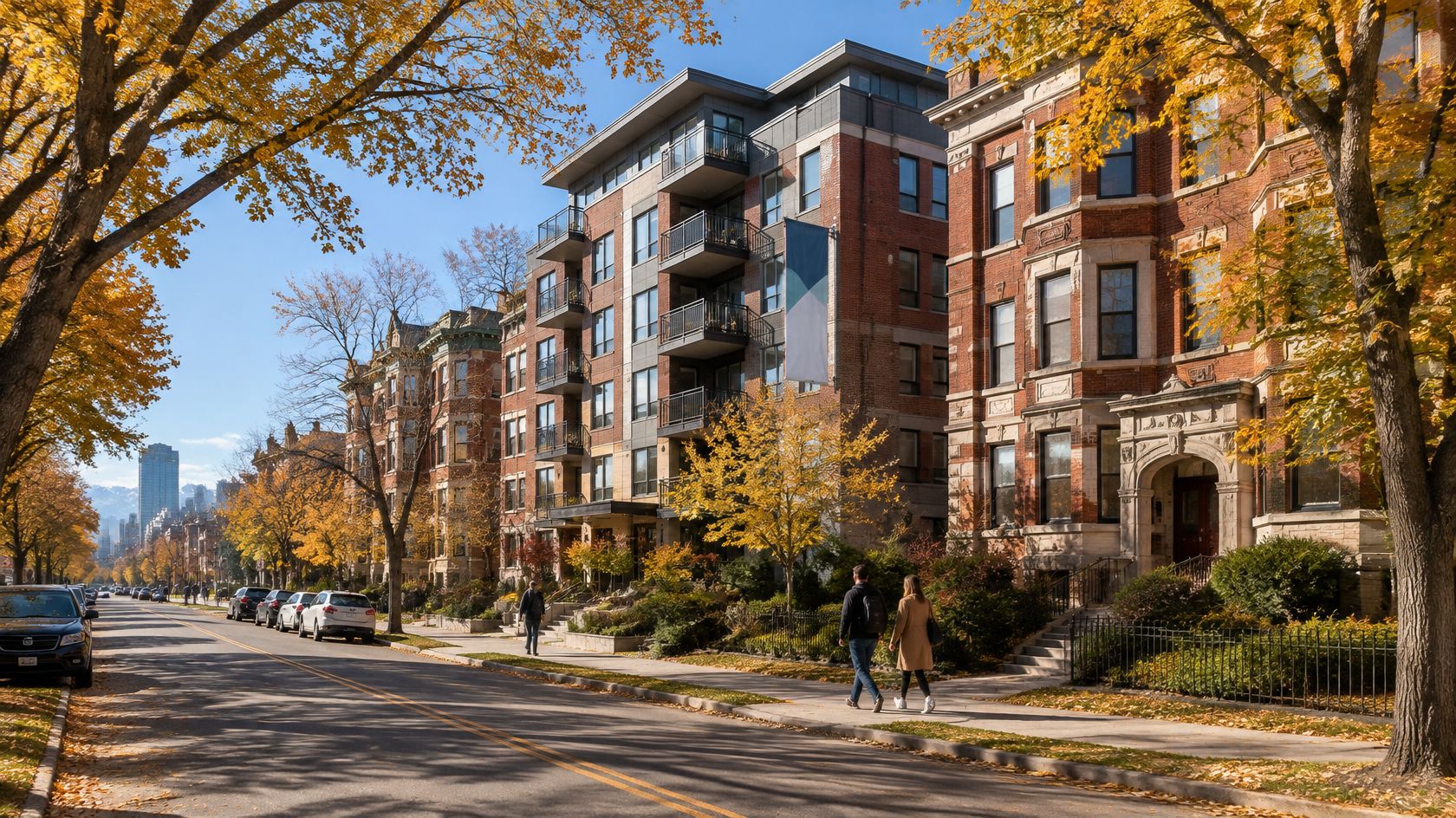
Rent varies a lot depending on where you are. Apartment List's November 2026 estimates put median rent at about $1,517 in Aurora, $1,559 in Littleton, $1,598 in Denver, $1,599 in Lakewood, $1,697 in Arvada, and $1,925 in Centennial. Inside Denver, the spread is even wider. RentCafe's late-October data for larger apartment buildings shows average rents of about $1,388 in Virginia Village and $1,695 in Capitol Hill, compared with $2,346 in Highland and $2,932 in Cherry Creek. Each source measures rent a little differently, so treat these as a feel for the range rather than an exact match to the metro averages above. And renting a single-family house will usually cost more than any of these apartment numbers.
The rental market is also sending mixed signals, which is worth understanding before you assume today's deals will last. Rents are still lower than a year ago, and CBRE shows occupancy dipped slightly in the third quarter, so renters haven't lost their leverage. But rents have now risen for two straight quarters, and only 1,290 new apartments were delivered across the metro in the third quarter, the fewest in five years. Fewer new buildings opening is how a renter's market slowly stops being one. I'm not predicting rents are about to jump. I'm saying the free-month-of-rent era isn't guaranteed to last forever, and it's worth factoring into your thinking.
Why the Monthly Payment Isn't the Whole Story
Comparing rent to a mortgage payment is a little like comparing a rental car to a car payment. The rental might be cheaper this month, but at the end of the year one of them left you with something and the other one didn't. That analogy only goes so far, though, because a house also comes with costs a landlord normally covers.
On the ownership side, part of every mortgage payment pays down your loan. On that $337,500 condo loan, you'd pay down roughly $3,300 of principal in the first year, and that number grows every year after. Your principal and interest payment also stays the same for 30 years on a fixed loan, while rent can change every time your lease renews. And you get control: paint the walls, get the dog, stay as long as you want.
On the renting side, you avoid the stuff that doesn't show up in a payment comparison. Maintenance and repairs are on someone else. You're not paying closing costs to buy or agent fees and other costs to sell. Your down payment can stay invested or in savings instead of being tied up in a house. And you can leave when your lease is up, which matters a lot if your job, relationship, or plans might change.
Neither column is automatically the winner. The question is which list matters more for you over the time you're likely to stay.
How Long You'll Stay Matters More Than Anything Else
If I could only ask one question to help someone decide, it would be: how long do you realistically plan to live there?
Buying and selling a home both come with real transaction costs. If you buy and sell within a couple of years, those costs can easily wipe out whatever you gained from paying down your loan, and you'd likely have been better off renting. The longer you stay, the more time your principal paydown and any appreciation have to outrun those costs, and the more years you benefit from a payment that isn't going up with your rent.
Here's the part a lot of "buying always wins" content skips. Denver prices haven't been doing the heavy lifting lately. DMAR's year-to-date median for detached homes is $650,000, the same as each of the last two years, and the year-to-date median for condos and townhomes is down about 3%. So I wouldn't buy in Denver right now counting on appreciation to bail out a short timeline. If you're buying, buy because the payment works and you plan to stay a while. If appreciation shows up, great. Treat it as a bonus, not the plan.
When Renting Makes More Sense in Denver
Renting is probably the smarter call if you expect to move within the next few years, if your income or job situation is uncertain, if buying would wipe out your emergency savings, or if you're new to Denver and still figuring out which part of the metro you actually want to live in. That last one is underrated. Plenty of people who relocate here fall in love with a neighborhood they never would have picked from out of state. Renting for a year while you figure that out is not a failure. It's research.
It also makes sense if the only way to make a purchase work is stretching into a payment that keeps you up at night. A house you can barely afford isn't an investment. It's a stressor with a garage.
When Buying Makes More Sense
Buying tends to make more sense if you plan to stay put for at least the next five years or so, your income is stable, you can buy without draining your savings, and the full monthly cost fits your budget, not just the version that looks good on a mortgage calculator. It also makes more sense if you value stability and control, like knowing your payment won't change and nobody can decide not to renew your lease.
And right now, buyers who are ready have something they didn't have a few years ago: negotiating room. There were nearly 13,000 active listings across the metro at the end of October, about 4% more than a year ago, and condo and townhome supply sat above seven months. Seller concessions have become a routine part of the deal, too, which I broke down in my October 2026 Denver housing market update. That means more chances to negotiate on price, closing costs, or a seller-paid rate buydown, which I also walked through in my post on what to do while mortgage rates are stuck above 7%. If condos are where your budget lands, my post on whether Denver condos are a good buy right now covers HOA fees, reserves, and what to watch for. And if you're open to something brand new, builders are offering some of the biggest incentives around, which I covered in Denver new construction incentives.
Should You Keep Renting Until Mortgage Rates Drop?
Maybe. But be clear-eyed about what waiting gets you. Rates have eased for three weeks in a row, but they're still nearly a full point higher than they were a year ago. If rates fall meaningfully, you won't be the only renter who notices. Buyers on the sidelines tend to come back at the same time, and the leverage you'd have today can shrink quickly. Meanwhile, you're still paying rent, and rent isn't guaranteed to stay where it is.
I'm not saying that to rush anyone. Waiting is a completely reasonable choice if your finances, timeline, or plans aren't ready. I'm saying "I'll buy when rates drop" isn't really a plan on its own. A better plan is knowing what payment works for you today, what would have to change for buying to make sense, and being ready to move when it does.
If You're Renting Now, Use This Time Well
Even if you decide to keep renting for another year, you can make that year count. Check your credit and clean up anything that's dragging it down. Keep building savings for a down payment and a cushion beyond it. Have a no-pressure conversation with a lender so you know what you'd actually qualify for and which loan programs or down payment assistance options might fit. Pay attention to your lease renewal date too, since lining up your lease with a realistic buying timeline can save you from paying for two places at once.
None of that commits you to anything. It just means that when the right time and the right place show up, you're ready instead of scrambling.
Frequently Asked Questions
Is it cheaper to rent or buy in Denver right now?
On a monthly basis, renting is usually cheaper. CBRE reported an average Denver apartment rent of $1,776 in the third quarter of 2026, while the principal and interest alone on a median-priced Denver-area condo or townhome ($375,000) with 10% down at 7.18% is about $2,285 a month, before taxes, insurance, and HOA dues.
Are rents going down in Denver?
Compared with a year ago, yes. CBRE shows Denver apartment rents down 2.9% year over year in the third quarter of 2026. But rents have risen for two straight quarters, and new apartment deliveries fell to a five-year low. Rents have been soft, not in free fall.
How long should I plan to stay in Denver before buying makes sense?
There's no universal number, but buying usually makes more sense the longer you stay, because it gives your loan paydown and any appreciation time to outrun the costs of buying and selling. If you might move within a couple of years, renting is often the better financial choice.
Is renting just throwing money away?
No. Rent buys you housing, flexibility, and freedom from repair bills and transaction costs. Owning builds equity over time, but it comes with its own costs that don't show up in a mortgage payment. The right choice depends on your timeline, finances, and goals.
The Bottom Line: Make the Decision That Fits Your Future
Deciding whether to rent or buy in Denver isn't as simple as holding your rent up next to whatever a mortgage calculator spits out. Right now, both sides have something going for them. Renters have a more competitive apartment market working in their favor, and buyers have more inventory and more room to negotiate. At the same time, higher borrowing costs, the ongoing costs of owning, and no guarantee on where prices go next make this a decision worth taking slowly. Neither renting nor buying is automatically the better financial move, and the right answer depends on your situation.
What matters most is knowing your total housing costs, how long you expect to stay, how much savings you'll have left after the move, and where you want your finances to be a few years from now. If you've been going back and forth on whether to keep renting or start looking for a home around Denver, I'm happy to help you compare the options. We can look at homes that fit your budget, figure out what owning one would actually cost, and see how that stacks up against what you're paying in rent today. You might find that buying makes sense sooner than you expected, or we might decide another year of renting is the smarter call. Either way, you'll make that choice with a clear picture of the numbers and what they mean for your future.
Disclaimer: This article is provided for general educational purposes and does not constitute financial, mortgage, investment, tax, or legal advice. Housing costs, mortgage rates, property values, rental prices, and financing requirements vary by property and individual circumstances. Payment examples are hypothetical and exclude certain expenses unless specifically identified. Consult qualified lending, financial, tax, or legal professionals regarding your individual situation.
Categories
- All Blogs (49)
- Affordability (5)
- Buyers (34)
- Buying Myths (15)
- Buying Tips (19)
- Divorce (1)
- Estate Planning (1)
- First Time Home Buyers (24)
- Home Prices (10)
- Investors (1)
- Market Update (8)
- Mortgage Rates (10)
- Move-Up Buyers (9)
- New Construction (4)
- Probate (1)
- Rent vs. Buy (3)
- Sellers (23)
- Selling Myths (7)
- Selling Tips (14)
Recent Posts









GET MORE INFORMATION